Words and Photos by Ellen Arden
When Sydney Ward looks back on the writing of “Done Sailing,” she remembers a world that had suddenly become unfamiliar. Even at home, the uncertainty of the early COVID shutdown followed them everywhere. She and her partner, Damon Moon, were quarantined together, wiping down groceries, taking precautions, and trying to make sense of a situation that seemed to change by the day. “I remember sitting on the front porch, still wearing a mask, writing this song,” she says. “It’s like this core memory.” Inside their home together, the dining room became a writing room, and a small studio became the place to track whatever came out of it. “I had a song that I was working on all morning, and then we’d jam it out that night in the dining room,” Ward says, and then they’d record it that night or the next morning. Nobody had a plan. “We didn’t know what the collection of songs were going to become, or even that they were becoming anything.”
Ward (vocals, guitar) and Moon (guitar, production) had already spent years making music together, but Sleepers Club emerged from a period when both were beginning to reconsider their relationship with the industry. Atlanta listeners may know Ward from Sydney Eloise & the Palms, the indie-pop project whose 2015 debut, Faces, earned premieres from outlets including NPR’s All Songs Considered and PopMatters. Moon, meanwhile, had established himself as a producer and engineer through Standard Electric Recorders Co., the Atlanta studio he founded, working with artists including Bathe Alone, Lunar Vacation, and Curtis Harding. By early 2020, their attention had shifted elsewhere. Moon was continuing to build Standard Electric while Ward was developing Little Treblemakers, her music school. “I felt like we were both at that time kind of burnt out with the hustle of the music industry a bit, and we both needed a little bit of space from it,” Ward says. The pandemic brought the entire world to a halt, and a plan Ward already had to record in April suddenly moved to the forefront. It became “a space for us to escape,” Ward says, “creating a little dream world outside of reality to exist as artists.”
The result was roughly 14 songs, written and tracked over a few weeks in a small studio on Memorial Drive, next to a Waffle House. When it was done, they knew it. “It’s the faucet’s off, right? The faucet was on, oh, and then the faucet was off,” Ward says. Then came survival mode… and the songs just sat on a hard drive – for years.
But around a year or two ago, the songs began to find their way back into the conversation. The feelings surrounding the period when they were written started resurfacing, and Ward took it as a sign that the time had come to set them free. “The feelings of COVID when we kind of wrote this collection of songs were resurfacing, and it felt like a signal from the universe,” Ward says, “like all right, time to let these fly, like time to let these go.”
Ahead of the release of their debut album, nothing feels right. Frequency ATL sat down with Sleepers Club in the studio to talk about the record’s time-capsule origins, the strict limits that shaped it, and why this band is built to be fun.

Sleepers Club’s sound has a dreamy sleazepop quality: hazy, fuzzy guitars, big strummers, and an easy, almost effortless danceability. There’s something nostalgic about it, like the soundtrack to an old memory you haven’t thought about in years, one that still makes you smile. But that warmth sits in interesting contrast with the writing. Beneath the upbeat melodies and soaring choruses are often gloomy, melancholy reflections on indecision, relationships dissolving or simply running their course, isolation, and the possibilities of finding yourself again. “I love a good hook and I love a soaring chorus,” Ward says. When asked about which song truly encompasses the record and showcases that playful balance, Ward instantly points to the title track. “Sonically it really encompasses this shoegaze, chaotic kind of anxiety, but also a hopefulness in it that we’re gonna be okay, even though nothing feels right.”
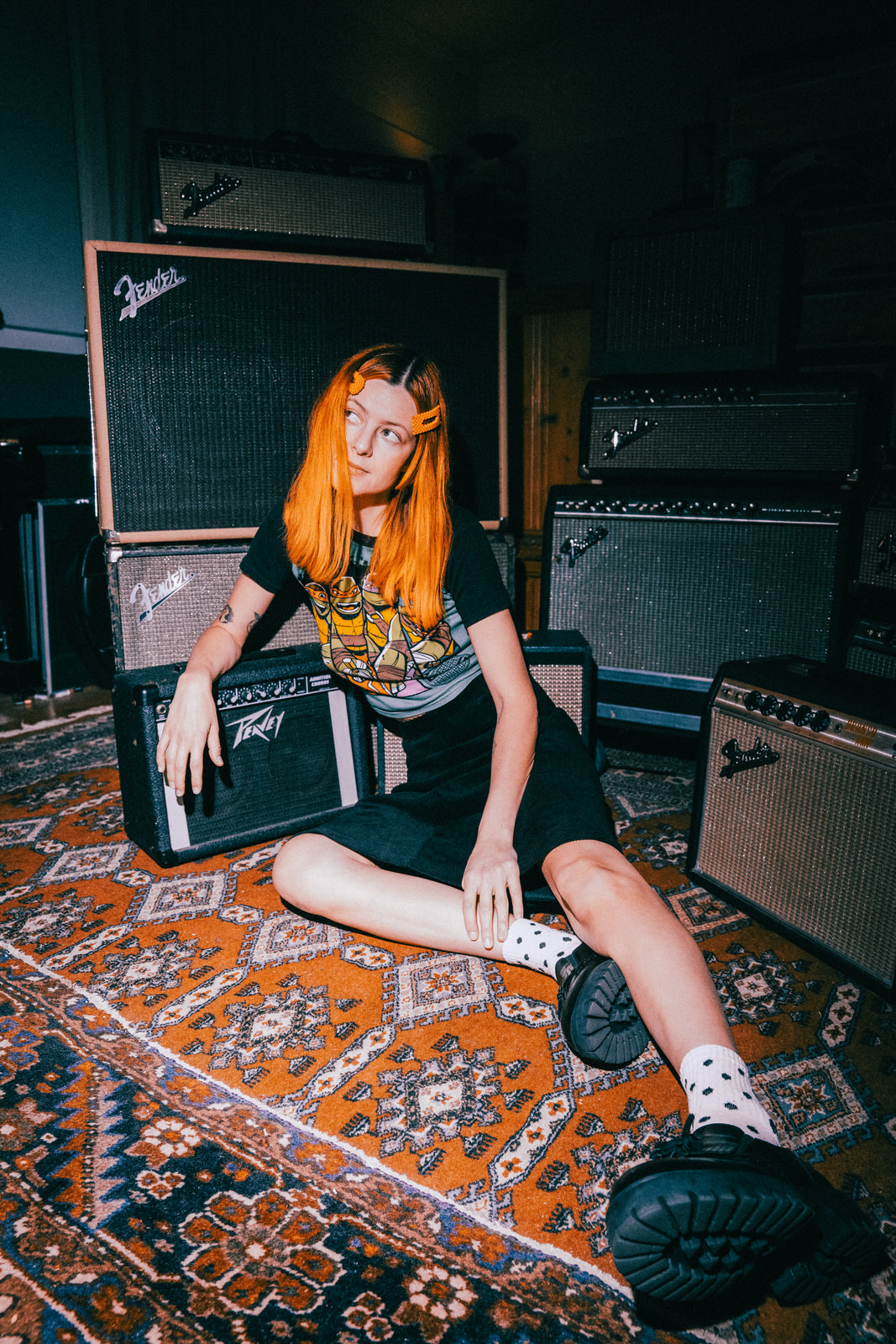
Part of the sonic charm of nothing feels right came from what Moon chose to leave out during their recording process. “It was just the two of us in the studio, and I didn’t have an assistant to run around and help me set stuff up. So, these are the two guitar amps we’re gonna use on the record, and these are the two guitars, and that guitar is always played with that amp, and this guitar is always played with this amp, and so there were very strict limitations. I feel like those things shape the sound for sure.” At the time, Moon also chose two synthesizers and veered away from plug-in instruments to help give the record a real and an authentic sound. Ward credits the space for its sonic contributions, too. “Spaces are special. They bring their own little character into the whole recording process and songwriting process too. I feel like I have a deep connection to spaces, and that influences the song that comes through… So, I definitely think us recording it there on Memorial next to Waffle House was super impactful to the sonic sound of Sleepers Club.”
Those original recordings almost took a different path. When the pair moved into a new studio that August, they briefly talked about re-recording everything, since those first versions were essentially demos. But then life got busy, and Ward is glad it did. “With so much reflection, they would never be what they are,” she says. “Recreating them now here, it’s just taken the heart out of it in a way. It had to be there. It had to be in that moment.” Moon, who says he wouldn’t change anything, hears the era in the tapes. “We could critique it, but looking back on it, it feels like such a time capsule, and I can hear our anxiety in it.”
But what began as a project between Ward and Moon has since grown into a live band. As the pair started releasing the songs, they knew they’d need one. “If we’re gonna release these songs, we need a band, we need a live band to put together,” Ward says. They reached out to friends, and Anna Griffith (keys, guitar, vocals), Mason Palanti (drums), and Tim Holder (bass) joined the lineup. Friends of the couple and fellow teachers at Little Treblemakers, they have a history with Moon that predates Sleepers Club. He first worked with them while producing a record for their previous band in Florida, before they all moved to Atlanta. Moon calls them “some of our best friends” and says they’re “all kind of like MVPs in their own way.” Ward says it means a lot that they signed on to something already made. “It’s really beautiful that they trust us and want to be a part of it.”
That collaborative process also has to translate to the stage. “We want to be able to perform all of this live with a smallish band of five of us,” Ward says. “Whereas a project we were in before, we had six, and sometimes added more people, and the parts were all crazy.” This time, the rule was simple. “Anything that’s on the record, we can reproduce on the stage.” In a time when backing tracks in sets are abundant, Moon says they opted for a simpler setup and that was deliberate. “We wanted to do something simple, or more simple,” he says. “A little more run and gun,” Ward adds. Live, Moon’s keys rig for Griffith is built around an old 70s string synth, “pretty definitive to the way we sound live,” and he says offset guitars have become “a really important thing” for the band’s sound now. He also carries a feedback pedal he built himself. “All it does is harsh feedback, and it’s called the Employee Review,” he says. “I don’t use it very much because it’s really harsh and really not pleasant. And Syd yells at me when I use it too much.” “Reel it back,” Ward adds.
Keeping the instrumentation simple doesn’t necessarily make things easier for the vocalist. “They’re all very vocal-centric songs and pretty demanding on Syd,” Moon says. “I have asthma, so sometimes I can’t breathe, and I’ve been working on that,” Ward says. “Every single one has big energy, and I’m a big energy person.”
That emotional intensity comes through in different ways across the record. Moon points to “Mirror Mirror,” the most recent single when we met, as a personal favorite. “A really strong melody that Syd wrote, and the vocal performance on it I love,” he says. For Ward, however, it was one of the hardest songs to write and release. “Sometimes we can only view it by how others have done us wrong, and through that kind of victim mentality, and ‘Mirror Mirror’ was my kind of calling me out,” she says. The song forced her to recognize how avoiding confrontation and trying to keep the peace had sometimes meant not honoring herself or others. “I didn’t speak up about things and avoided confrontation… thinking I’m keeping the peace in situations, but really not honoring myself and therefore not honoring that other person too.”
Other songs trace different points along that same emotional landscape. “Alone,” the first song they recorded, was “the entryway into what the record is,” Ward says, while “Freaking Out” helped “set the tone of the time.” “Capricorn Moon” explores the feeling of not being seen or prioritized by someone close. Ward describes it as “acceptance and sadness at the same time,” and sees songwriting as a way to work through those feelings. “Songs are a space to release, and I think there are so many of us that use it to process more of the darker things.”
For a record that began as a way to escape the uncertainty of the outside world, finally putting it out into that world has become its own kind of release. Ward says the songs sat on a hard drive for so long partly because of the fear of being seen and the expectation that everything needs to be perfect. “It prevents us from really growing, and it prevents us from creating the next thing because we’re so hung up on this old thing we haven’t released,” she says. “It’s like the drain is clogged up, and I cannot process anything else or produce anything else until it is released.”
Now, with nothing feels right finally out, its title feels less like a timestamp of 2020 than a reflection of a feeling that hasn’t entirely gone away. “Nothing does feel right still, in the world, and that feeling is still there,” Ward says.
Stream nothing feels right on all platforms today.